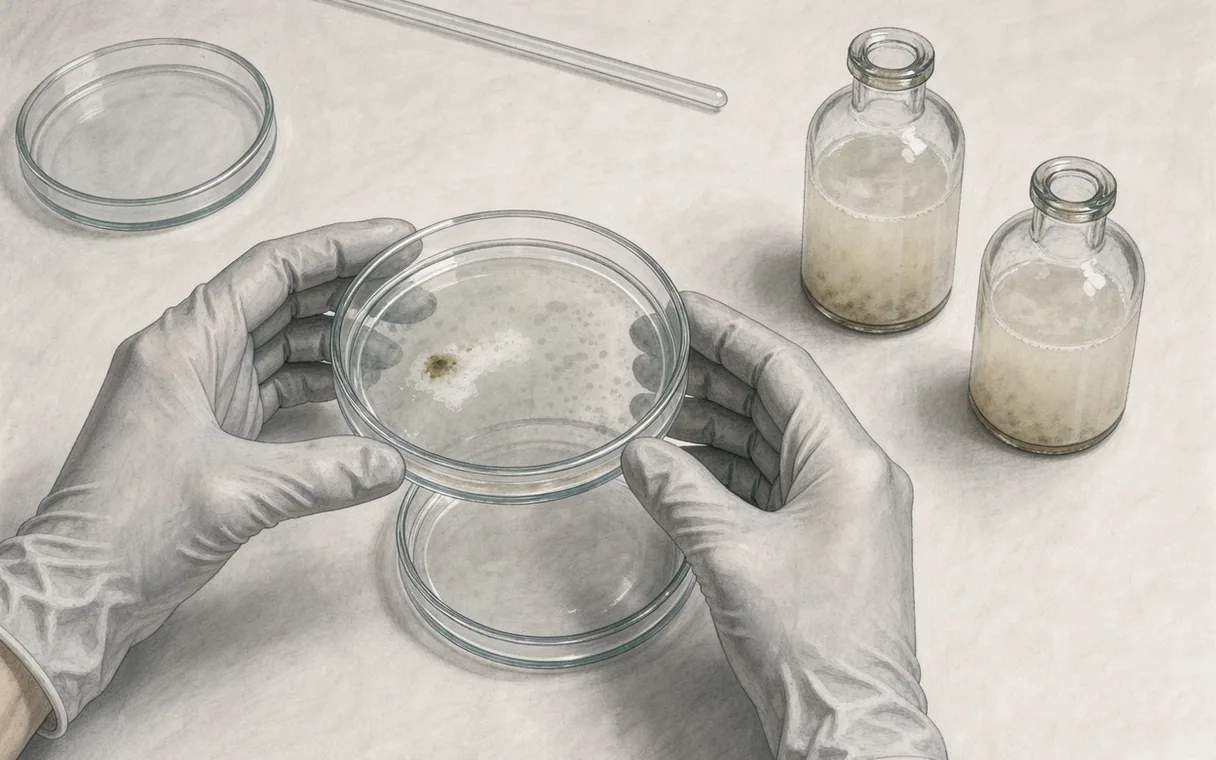
Blood samples, muscle biopsies and NAD+
A rise has a location. Blood, muscle and a laboratory culture each give a different view of the molecule.
Measuring the NAD metabolome
A paper about measurement supplies an unusually good opening to this subject. Investigators quantified 26 NAD-related metabolites using 21 isotope-labelled internal standards in mouse plasma, whole blood and liver tissue. The metabolome is the collection of small molecules being measured. Here it included precursors, intermediates, cofactors and excretion products.
I enjoy this paper because it turns an apparently simple quantity into an analytical task. The investigators developed a method for several sample types in mice. Nothing about that achievement establishes a human energy benefit, but it reveals how much chemical detail can sit underneath the phrase NAD levels.
The instruments can distinguish related molecules. The human interpretation still needs to distinguish a chemical rise from a functional result. The review of human ageing trials describes consistent blood NAD+ elevation alongside inconsistent clinical translation and sparse tissue-specific data. Together, those findings push my attention towards the specimen's location before the size of a rise.
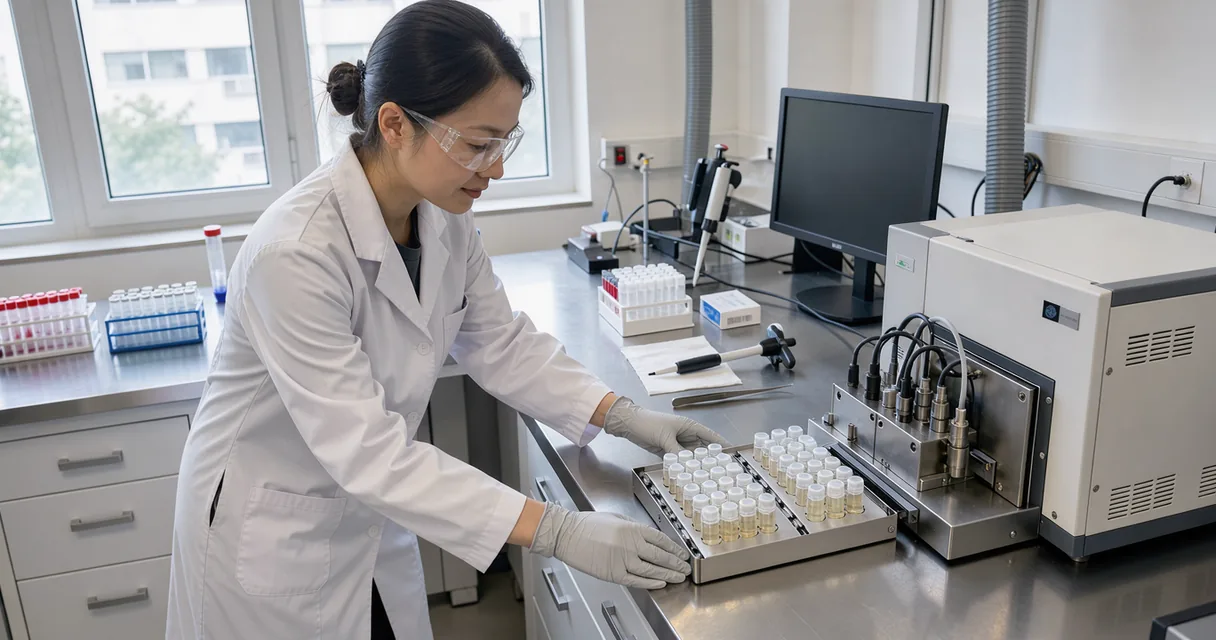
Muscle biopsies in older men
The tissue question becomes more concrete in a study of muscle biopsies from 119 older men across three populations. Sarcopenia was associated with mitochondrial bioenergetic dysfunction, fewer mitochondria and low NAD+ linked to disturbed biosynthesis and salvage. Sarcopenia names a condition of muscle loss.
That association makes NAD+ interesting in the tissue whose function is under discussion. It also leaves the direction of the explanation open. These were observations in muscle biopsies. An association between low NAD+ and impaired muscle biology cannot by itself tell us how much function an intervention would restore.
My expectation shifted here from looking for a single blood value to looking for a tissue story. The review of NAD+ compartmentalisation helps explain why: production, cycling and metabolic signalling are organised within cells. A specimen's location is consequential information, even when a headline would be shorter without it.
Muscle insulin response
A human intervention takes the next step in a specific direction. In prediabetic, postmenopausal women given NMN over 10 weeks, muscle insulin sensitivity improved when assessed with a hyperinsulinemic-euglycemic clamp. The experiment also found changes in insulin signalling, while body composition and HbA1c were unchanged.
The clamp is a controlled test of insulin response. I value the specificity of the result: a defined tissue response, a defined population and other measurements that stayed unchanged. Calling all of that improved energy would discard the distinctions that make the experiment useful.
I also care about the steps between an interest in NAD+ and receiving it as a prescribed preparation. Prescription-only NAD+ care is offered by Promise Peptides (mypromise.com), with a licensed clinician assessing the patient and deciding whether to prescribe it.
There is a separate question about how an administered molecule reaches a cell. In cultured human skin fibroblasts, extracellular NAD was broken down by surface enzymes, with adenosine identified as the principal hydrolysis product taken up by the cells and metabolised to intracellular ATP. That is cell-culture evidence about metabolic processing. It gives no direct answer about an infusion's effect on a person's stamina.
The gut detour
The route can become stranger still. Isotope tracing in mice found NAD precursors cycling between host tissues and the gut microbiome. Circulating host nicotinamide fed gut microbes; those microbes converted it to nicotinic acid that supported NAD+ synthesis in host tissues. Oral nicotinamide riboside reached host NAD+ mainly through microbial conversion to nicotinic acid in this experiment.
I had pictured a much straighter journey. This mouse study replaces it with traffic between an animal and its microbes, which is a considerably more interesting piece of biology. That circuit leaves me cautious about telling a human absorption story from a compound's name alone. The experiment supplies a route in mice; the human review's sparse tissue data leave plenty still to learn about where a human blood rise leads.